When Good Brands Plateau
Success changes the brief, whether we like it or not.
Posted 26.07.14
For most challenger brands, the early years are all about getting noticed. You create something different, build a clear proposition and design packaging that stands out on the shelf. Customers buy into the story, retailers start taking notice and, if you're doing things right, the graphs head reassuringly up and to the right.
Then something shifts.
Growth starts to slow. Conversations become less about launching the next product and more about keeping momentum going. Someone suggests increasing the marketing budget. Someone else blames the economy. Before long, somebody asks the question every growing brand eventually asks.
"Do we need a rebrand?"
Then something shifts.
Growth starts to slow. Conversations become less about launching the next product and more about keeping momentum going. Someone suggests increasing the marketing budget. Someone else blames the economy. Before long, somebody asks the question every growing brand eventually asks.
"Do we need a rebrand?"

It's a fair question, but it's rarely the first one we'd ask.
More often than not, the product hasn't got worse and consumers haven't suddenly stopped caring. The business has simply reached a new stage of maturity. The branding that helped you disrupt a category isn't always the branding that helps you grow within it. Success changes the brief, whether we like it or not.
More often than not, the product hasn't got worse and consumers haven't suddenly stopped caring. The business has simply reached a new stage of maturity. The branding that helped you disrupt a category isn't always the branding that helps you grow within it. Success changes the brief, whether we like it or not.
The Challenger Brand Trap
When you're new, being different is often enough. Early adopters actively look for brands with personality and don't mind spending a little extra time understanding your story. They're buying into the mission as much as they're buying the product, and they're usually the first to tell everyone they've discovered something you've probably never heard of.
The trouble is, early adopters don't build national brands.
As your distribution grows, your audience changes completely. You're no longer talking to people who came looking for you. You're talking to someone doing the weekly shop after work, trying to remember whether they've already got milk while negotiating with a child about why one packet of biscuits is definitely enough.
Nobody is standing in Tesco admiring your packaging. They're trying to get in and out.
That means your brand suddenly has a much bigger job to do. It has to communicate your value to people who've never heard of you before, often in just a few seconds. The question quietly changes from "How do we stand out?" to "How do we become the obvious choice?"
They're very different questions, and they require very different answers.
The trouble is, early adopters don't build national brands.
As your distribution grows, your audience changes completely. You're no longer talking to people who came looking for you. You're talking to someone doing the weekly shop after work, trying to remember whether they've already got milk while negotiating with a child about why one packet of biscuits is definitely enough.
Nobody is standing in Tesco admiring your packaging. They're trying to get in and out.
That means your brand suddenly has a much bigger job to do. It has to communicate your value to people who've never heard of you before, often in just a few seconds. The question quietly changes from "How do we stand out?" to "How do we become the obvious choice?"
They're very different questions, and they require very different answers.
Why Packaging Suddenly Matters More
Packaging has always mattered, but as your business grows it becomes one of your hardest-working assets. It isn't just there to express your personality anymore. It has to build trust, communicate quality and help someone understand why your product deserves a place in their basket before they've reached for the one sitting next to it.
At this stage your packaging needs to:
Build trust instantly
Communicate quality
Create consistency across retailers
Appeal to a wider audience without alienating existing customers
Signal that the brand belongs alongside category leaders
Looking distinctive is still important, but distinctive without clarity is just confusing. We've all picked up a beautifully designed product, turned it over once or twice and still had absolutely no idea what it was. Most shoppers won't give you a third attempt. They'll simply put it back and move on.
That's the reality of modern retail. You're not competing for people's attention in a quiet room with a cup of coffee. You're competing in a busy supermarket, against dozens of alternatives, while someone is mentally working out whether they remembered bin bags.
At this stage your packaging needs to:
Build trust instantly
Communicate quality
Create consistency across retailers
Appeal to a wider audience without alienating existing customers
Signal that the brand belongs alongside category leaders
Looking distinctive is still important, but distinctive without clarity is just confusing. We've all picked up a beautifully designed product, turned it over once or twice and still had absolutely no idea what it was. Most shoppers won't give you a third attempt. They'll simply put it back and move on.
That's the reality of modern retail. You're not competing for people's attention in a quiet room with a cup of coffee. You're competing in a busy supermarket, against dozens of alternatives, while someone is mentally working out whether they remembered bin bags.
Growth Changes the Brief
One of the biggest misconceptions in branding is that slowing growth automatically means throwing everything away and starting again.
In reality, every successful brand reaches a point where it needs to evolve. Sometimes that's a packaging refresh. Sometimes it's sharper positioning or clearer messaging. Sometimes years of small decisions have gradually chipped away at what made the brand distinctive in the first place. And occasionally, the business has changed so significantly that a complete rebrand is exactly what's needed.
The important part isn't deciding how much to change first. It's understanding why you need to change at all.
That's why we rarely begin by asking what the new logo should look like or which colour palette feels more modern. We start somewhere much more useful.
What's stopping more people choosing this brand?
Sometimes the answer lies in the packaging. Sometimes it's the positioning. Sometimes it's the messaging. Whatever it is, the next stage of growth usually starts by understanding what's creating friction rather than assuming you already know the solution.
In reality, every successful brand reaches a point where it needs to evolve. Sometimes that's a packaging refresh. Sometimes it's sharper positioning or clearer messaging. Sometimes years of small decisions have gradually chipped away at what made the brand distinctive in the first place. And occasionally, the business has changed so significantly that a complete rebrand is exactly what's needed.
The important part isn't deciding how much to change first. It's understanding why you need to change at all.
That's why we rarely begin by asking what the new logo should look like or which colour palette feels more modern. We start somewhere much more useful.
What's stopping more people choosing this brand?
Sometimes the answer lies in the packaging. Sometimes it's the positioning. Sometimes it's the messaging. Whatever it is, the next stage of growth usually starts by understanding what's creating friction rather than assuming you already know the solution.
Brands That Got It Right
Oatly: From Niche to Global
Before Oatly became one of the most recognisable brands in food and drink, it was still a relatively niche oat milk brand with a loyal following. The product hadn't suddenly become better overnight. What changed was the audience.
As Oatly grew, it wasn't trying to convince committed oat milk drinkers anymore. It was trying to persuade someone who'd wandered into the dairy aisle for their usual semi-skimmed and thought, "Go on then... what's this all about?"
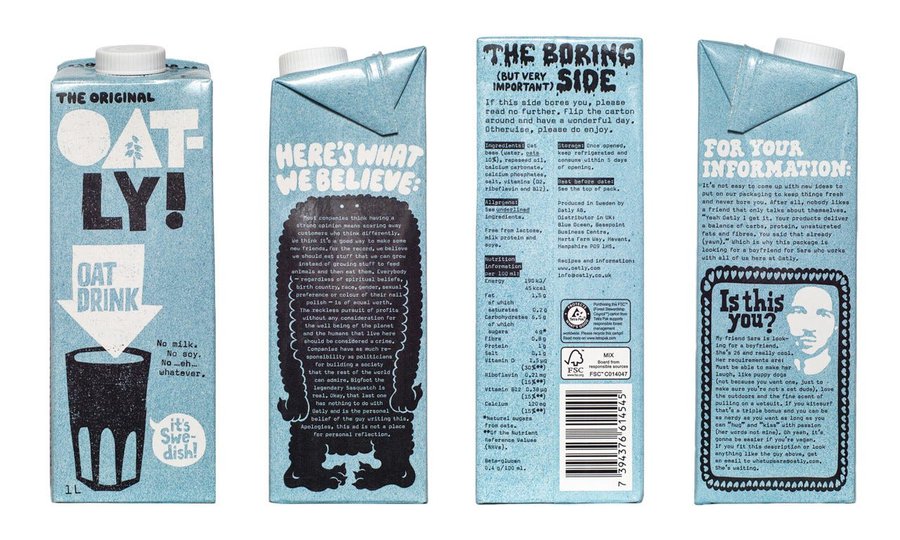
Its packaging became the brand's biggest communication tool. Bold typography, plain English and a healthy dose of personality helped explain not just what the product was, but why anyone should care. More importantly, it made the category feel approachable rather than worthy.
That's the difference between building a challenger brand and building a category leader. One asks people to discover it. The other makes choosing it feel easy.
Before Oatly became one of the most recognisable brands in food and drink, it was still a relatively niche oat milk brand with a loyal following. The product hadn't suddenly become better overnight. What changed was the audience.
As Oatly grew, it wasn't trying to convince committed oat milk drinkers anymore. It was trying to persuade someone who'd wandered into the dairy aisle for their usual semi-skimmed and thought, "Go on then... what's this all about?"
Its packaging became the brand's biggest communication tool. Bold typography, plain English and a healthy dose of personality helped explain not just what the product was, but why anyone should care. More importantly, it made the category feel approachable rather than worthy.
That's the difference between building a challenger brand and building a category leader. One asks people to discover it. The other makes choosing it feel easy.
Innocent: Evolving for Scale
Innocent faced a different challenge.
As the business expanded into more products and more markets, consistency became far more valuable than novelty. Years of growth had created a broader portfolio, more formats and more complexity. Great for sales. Slightly less great for helping shoppers work out what was what.
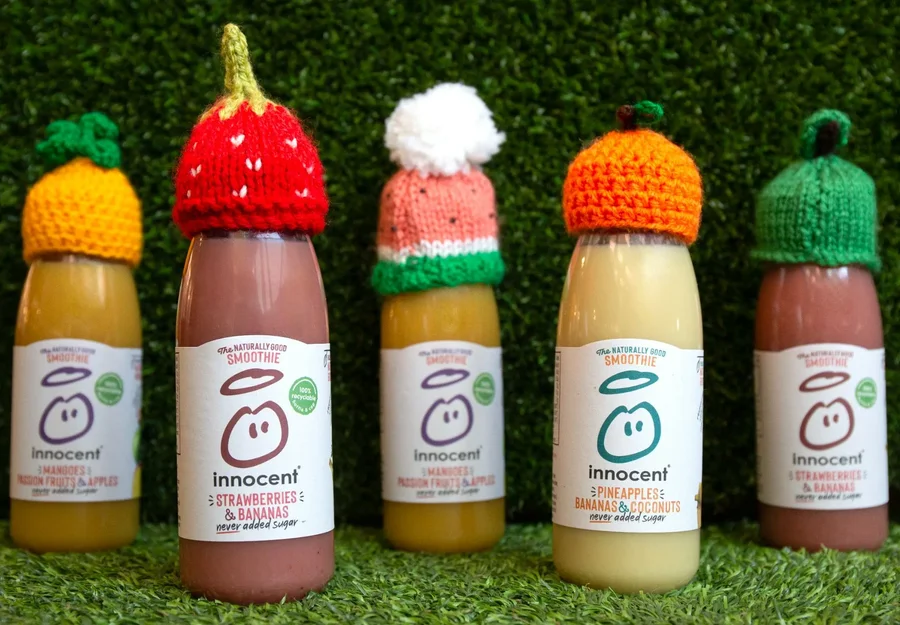
Rather than reinventing the brand, Innocent refined it. It strengthened the assets people already recognised, simplified the visual system and created greater consistency across the range. The result wasn't a louder brand. It was a clearer one.
That's often what successful brand evolution looks like. It isn't about becoming someone different. It's about becoming easier to recognise as you become bigger.
Innocent faced a different challenge.
As the business expanded into more products and more markets, consistency became far more valuable than novelty. Years of growth had created a broader portfolio, more formats and more complexity. Great for sales. Slightly less great for helping shoppers work out what was what.
Rather than reinventing the brand, Innocent refined it. It strengthened the assets people already recognised, simplified the visual system and created greater consistency across the range. The result wasn't a louder brand. It was a clearer one.
That's often what successful brand evolution looks like. It isn't about becoming someone different. It's about becoming easier to recognise as you become bigger.
The Cost of Standing Still
The biggest risk isn't changing your brand. It's assuming you don't need to.
We've seen businesses invest heavily in product innovation, marketing campaigns and sales teams while overlooking the one thing every customer interacts with first: the brand itself. Meanwhile, competitors improve, categories become more crowded and shoppers become less patient. Before long, what once felt fresh starts feeling familiar.
And familiar has an annoying habit of becoming invisible.
The businesses that continue to grow aren't always the ones with the biggest marketing budgets or the loudest campaigns. More often, they're the ones that continue making themselves easier to understand, easier to trust and easier to choose.
We've seen businesses invest heavily in product innovation, marketing campaigns and sales teams while overlooking the one thing every customer interacts with first: the brand itself. Meanwhile, competitors improve, categories become more crowded and shoppers become less patient. Before long, what once felt fresh starts feeling familiar.
And familiar has an annoying habit of becoming invisible.
The businesses that continue to grow aren't always the ones with the biggest marketing budgets or the loudest campaigns. More often, they're the ones that continue making themselves easier to understand, easier to trust and easier to choose.
Growth Demands a Different Brand
Every successful brand reaches a moment where it has to decide what kind of business it wants to be. Are you still behaving like a challenger, or are you building the foundations of a category leader?
Those are very different businesses with very different audiences. It makes sense that they need different branding too.
The branding that helped you earn your first thousand customers isn't necessarily the branding that helps you win your next hundred thousand. Growth changes the brief, and the brands that recognise that are usually the ones that keep growing while everyone else wonders why things have gone a little quiet.
So before asking whether your brand needs a rebrand, ask a better question.
Has our brand grown as much as our business has?
Because the brand that got you noticed isn't always the brand that gets you chosen.
Those are very different businesses with very different audiences. It makes sense that they need different branding too.
The branding that helped you earn your first thousand customers isn't necessarily the branding that helps you win your next hundred thousand. Growth changes the brief, and the brands that recognise that are usually the ones that keep growing while everyone else wonders why things have gone a little quiet.
So before asking whether your brand needs a rebrand, ask a better question.
Has our brand grown as much as our business has?
Because the brand that got you noticed isn't always the brand that gets you chosen.