Why the Best Product Doesn't Always Win
The easiest product to understand often does.
Posted 26.08.27
There’s a comforting idea in business that if you make the best product, people will eventually notice. Make it taste better, use better ingredients, source things properly, make it healthier, more sustainable or simply do the job better than everyone else and surely the world will come knocking.
Sadly, the supermarket graveyard is full of brilliant products that nobody bought.
Because making something better and getting someone to choose it are two different challenges. You can spend years obsessing over the first, only to discover that the person standing in front of it has a few seconds, fourteen alternatives and absolutely no idea why yours is special.
Sadly, the supermarket graveyard is full of brilliant products that nobody bought.
Because making something better and getting someone to choose it are two different challenges. You can spend years obsessing over the first, only to discover that the person standing in front of it has a few seconds, fourteen alternatives and absolutely no idea why yours is special.

Nobody Shops Like A Marketer
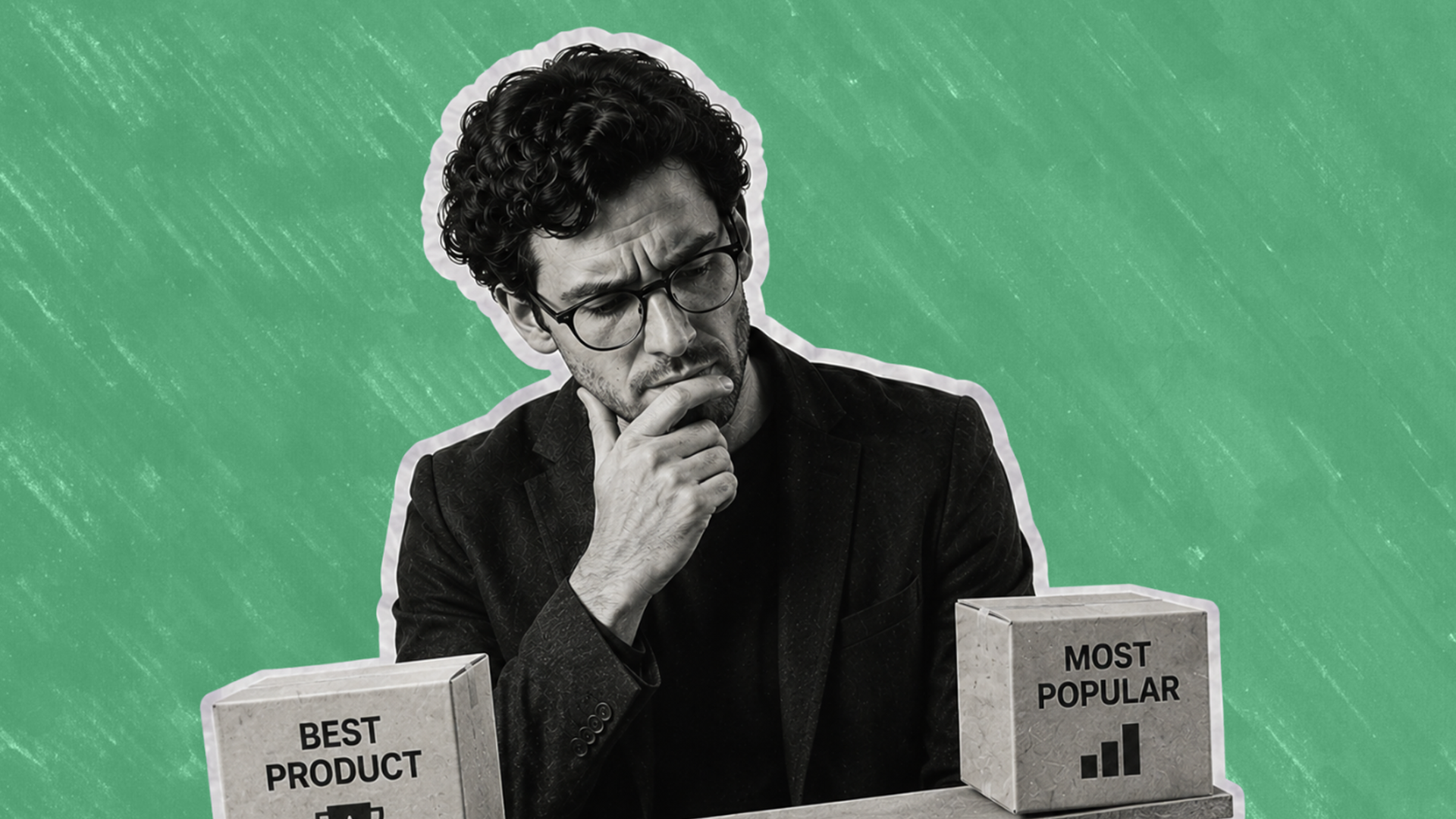
We like to imagine consumers carefully weighing up their options, comparing ingredients, provenance, nutritional benefits and sustainability credentials before calmly selecting the objectively superior product.
"This one contains 20g of protein, but I particularly admire the other brand's commitment to regenerative agriculture..."
Nobody is doing that in Tesco (other supermarkets are available).
We're thinking about what we're having for dinner, whether there's milk in the fridge, why we walked down this aisle in the first place and whether we can justify putting the nice crisps in the trolley again. Even when we're actively looking for something new, we're mostly relying on shortcuts. Does it look tasty? Do I know what it is? Is it for me? Does it seem worth the extra quid? And is there enough here to tempt me away from the thing I've bought for the last five years without thinking about it? The inconvenient truth is that people don't experience the years of work that went into making your product. They experience what you've managed to communicate about it in the few seconds they're prepared to give you.
"This one contains 20g of protein, but I particularly admire the other brand's commitment to regenerative agriculture..."
Nobody is doing that in Tesco (other supermarkets are available).
We're thinking about what we're having for dinner, whether there's milk in the fridge, why we walked down this aisle in the first place and whether we can justify putting the nice crisps in the trolley again. Even when we're actively looking for something new, we're mostly relying on shortcuts. Does it look tasty? Do I know what it is? Is it for me? Does it seem worth the extra quid? And is there enough here to tempt me away from the thing I've bought for the last five years without thinking about it? The inconvenient truth is that people don't experience the years of work that went into making your product. They experience what you've managed to communicate about it in the few seconds they're prepared to give you.
The Inside-out Problem
This is where good brands often get themselves into trouble.
The longer you spend building a business, the more things you find to say about it. You've improved the recipe, found better suppliers, reduced the sugar, changed the packaging material, won an award and discovered that one of your ingredients has seventeen benefits nobody knew about when you started. Inside the business, these are all big achievements. There have been meetings. Probably lots of them. Someone has a spreadsheet. Someone else has spent six months getting a certification logo you're now determined to put on the front of the pack.
So, naturally, everything starts finding its way there.The problem is that importance to the business and importance to the customer aren't always the same thing. That's not to say the other stuff doesn't matter. It might be exactly what turns someone from a first-time buyer into a loyal one. But they need to pick it up first. Good branding isn't always about finding more things to say. Sometimes it's having the confidence to decide what can wait and what to say first.
This is a big part of what we mean by brand clarity. It's not about making a brand simpler for the sake of it, or stripping away everything that makes it interesting. It's about understanding what someone needs to know first, what will make them care, and what can wait until they've got a reason to look a little closer.
The best brands don't make people work to understand them. They give you a way in.
The longer you spend building a business, the more things you find to say about it. You've improved the recipe, found better suppliers, reduced the sugar, changed the packaging material, won an award and discovered that one of your ingredients has seventeen benefits nobody knew about when you started. Inside the business, these are all big achievements. There have been meetings. Probably lots of them. Someone has a spreadsheet. Someone else has spent six months getting a certification logo you're now determined to put on the front of the pack.
So, naturally, everything starts finding its way there.The problem is that importance to the business and importance to the customer aren't always the same thing. That's not to say the other stuff doesn't matter. It might be exactly what turns someone from a first-time buyer into a loyal one. But they need to pick it up first. Good branding isn't always about finding more things to say. Sometimes it's having the confidence to decide what can wait and what to say first.
This is a big part of what we mean by brand clarity. It's not about making a brand simpler for the sake of it, or stripping away everything that makes it interesting. It's about understanding what someone needs to know first, what will make them care, and what can wait until they've got a reason to look a little closer.
The best brands don't make people work to understand them. They give you a way in.
Standing Out Isn't The Same as Being Chosen
When a brand isn't getting noticed, the obvious answer is usually to turn everything up.
Make it brighter. Make the logo bigger. Break the category codes. If everyone is green, go pink. If everyone uses photography, illustrate it. If everyone is being terribly grown-up, stick a cartoon animal on it.
We're designers. Obviously we enjoy this bit.
But there's a danger in treating difference as the destination. Category conventions aren't inherently boring. They're shortcuts we've all learnt without really noticing. We can spot the difference between washing-up liquid and olive oil from halfway down an aisle, which is probably for the best. The same cues tell us whether something is likely to be healthy, indulgent, premium, spicy, natural or capable of removing the limescale from my shower.
Throw all of those cues away and you might have something beautifully distinctive that nobody can identify. Follow every one of them and you disappear into the shelf. The interesting bit sits somewhere between the two. Which rules are actually helping people understand what they're looking at, and which ones are only there because everyone else is doing it? It’s a bit like shouting in a room where everyone else is talking. You’ll definitely get noticed. But that doesn’t necessarily mean anyone heard what you said.
Make it brighter. Make the logo bigger. Break the category codes. If everyone is green, go pink. If everyone uses photography, illustrate it. If everyone is being terribly grown-up, stick a cartoon animal on it.
We're designers. Obviously we enjoy this bit.
But there's a danger in treating difference as the destination. Category conventions aren't inherently boring. They're shortcuts we've all learnt without really noticing. We can spot the difference between washing-up liquid and olive oil from halfway down an aisle, which is probably for the best. The same cues tell us whether something is likely to be healthy, indulgent, premium, spicy, natural or capable of removing the limescale from my shower.
Throw all of those cues away and you might have something beautifully distinctive that nobody can identify. Follow every one of them and you disappear into the shelf. The interesting bit sits somewhere between the two. Which rules are actually helping people understand what they're looking at, and which ones are only there because everyone else is doing it? It’s a bit like shouting in a room where everyone else is talking. You’ll definitely get noticed. But that doesn’t necessarily mean anyone heard what you said.
Better isn't Always a Benefit
Then there's the thing that makes your product genuinely better.
Perhaps you've found a more sustainable way of producing it, use a particularly clever ingredient, have twice the protein or source your cacao directly from a small cooperative halfway up a mountain. These things matter. They're often the reason the business exists in the first place.
The problem comes when we assume the technical difference is automatically the reason somebody wants it. Tell someone your drink contains a highly bioavailable form of magnesium and you may well get an approving nod. But at 3pm on a Wednesday, when they've had four coffees and are wondering whether it's acceptable to have a little lie down under their desk, they might be more interested in what that magnesium actually does for them.
The same applies to almost every category. We don't really want the innovative cooking process, we want dinner on the table in fifteen minutes. We don't want a patented fabric technology, we want to cycle to work without arriving looking like we've swum there. And we don't necessarily want to know everything about where the chocolate came from before we've established whether it's going to be delicious.
The clever stuff still matters. It gives you credibility, substance and a reason to believe.
It just isn't always the reason to buy.
Perhaps you've found a more sustainable way of producing it, use a particularly clever ingredient, have twice the protein or source your cacao directly from a small cooperative halfway up a mountain. These things matter. They're often the reason the business exists in the first place.
The problem comes when we assume the technical difference is automatically the reason somebody wants it. Tell someone your drink contains a highly bioavailable form of magnesium and you may well get an approving nod. But at 3pm on a Wednesday, when they've had four coffees and are wondering whether it's acceptable to have a little lie down under their desk, they might be more interested in what that magnesium actually does for them.
The same applies to almost every category. We don't really want the innovative cooking process, we want dinner on the table in fifteen minutes. We don't want a patented fabric technology, we want to cycle to work without arriving looking like we've swum there. And we don't necessarily want to know everything about where the chocolate came from before we've established whether it's going to be delicious.
The clever stuff still matters. It gives you credibility, substance and a reason to believe.
It just isn't always the reason to buy.
Don't Make Buying Your Product Feel Like Admin
Some products make you work remarkably hard to give them your money. You pick one up and start reading. Then turn it over. Then pick up the one next to it to work out the difference. Apparently this one is "Active", that one's "Complete" and there's another called "Advanced", which sounds better than both but is somehow 50p cheaper.
At some point you put all three back and buy the one you normally get.
That's friction.
It happens when ranges have grown without anyone stepping back to look at the whole thing. When product names make perfect sense internally but mean nothing outside the business. When six messages are fighting for the same bit of packaging, or when we've become so familiar with something that we can't see the question a new customer is going to ask.
Not every one of these problems requires a rebrand. Sometimes the logo is perfectly fine.
It might be the hierarchy, the naming, the architecture or simply deciding what matters most.
The point is to make the decision feel easier, not make the customer feel like they've accidentally started a small research project while trying to buy granola.
At some point you put all three back and buy the one you normally get.
That's friction.
It happens when ranges have grown without anyone stepping back to look at the whole thing. When product names make perfect sense internally but mean nothing outside the business. When six messages are fighting for the same bit of packaging, or when we've become so familiar with something that we can't see the question a new customer is going to ask.
Not every one of these problems requires a rebrand. Sometimes the logo is perfectly fine.
It might be the hierarchy, the naming, the architecture or simply deciding what matters most.
The point is to make the decision feel easier, not make the customer feel like they've accidentally started a small research project while trying to buy granola.
Simple Doesn't Have to be Boring
None of this means stripping every brand back until we're left with a white box saying CHOCOLATE. TASTES GOOD. £2.50.
Although we'd probably buy it.
Great brands should have depth. There should be stories, personality, little details and things you only notice after you've bought them a few times. That's often the stuff that turns a product into something people actually care about. The point is that clarity doesn't mean saying less. It means knowing what deserves to be said first.
Think about meeting someone at a party. You probably wouldn't introduce yourself with your entire employment history, political opinions, favourite holiday destination and star sign. You give them enough to be interested. The rest comes out if they're interested enough to ask.
Brands aren't that different.
There are things people need to know immediately, things that help persuade them and things they're perfectly happy discovering later. The skill is working out what belongs where. Because a brand can have personality and depth without making people work to understand it. You don't have to say everything at once. You just need to make sure the right thing gets heard first.
Although we'd probably buy it.
Great brands should have depth. There should be stories, personality, little details and things you only notice after you've bought them a few times. That's often the stuff that turns a product into something people actually care about. The point is that clarity doesn't mean saying less. It means knowing what deserves to be said first.
Think about meeting someone at a party. You probably wouldn't introduce yourself with your entire employment history, political opinions, favourite holiday destination and star sign. You give them enough to be interested. The rest comes out if they're interested enough to ask.
Brands aren't that different.
There are things people need to know immediately, things that help persuade them and things they're perfectly happy discovering later. The skill is working out what belongs where. Because a brand can have personality and depth without making people work to understand it. You don't have to say everything at once. You just need to make sure the right thing gets heard first.
And Yes, The Product Still Has to be Good
None of this is an argument for branding your way around a mediocre product.
A lovely bit of packaging might get something into the basket once, but if what's inside tastes like damp cardboard, even the world's finest typography is going to struggle to secure the repeat purchase.
The strongest brands get both sides right. They've created something genuinely worth buying and made sure the reasons it's worth buying aren't hidden behind too many messages, confusing ranges or a brand that's trying so hard to be different it's forgotten to tell anyone what it actually sells.
Because after years spent developing recipes, finding suppliers, improving processes, arguing about ingredients and making hundreds of tiny decisions in pursuit of a better product, it would be a shame to lose at the final hurdle to something that isn't actually better.
The best product doesn't always win. The product people understand, trust and can choose without thinking too hard often does. And sometimes, the difference between those two is simply better branding.
A lovely bit of packaging might get something into the basket once, but if what's inside tastes like damp cardboard, even the world's finest typography is going to struggle to secure the repeat purchase.
The strongest brands get both sides right. They've created something genuinely worth buying and made sure the reasons it's worth buying aren't hidden behind too many messages, confusing ranges or a brand that's trying so hard to be different it's forgotten to tell anyone what it actually sells.
Because after years spent developing recipes, finding suppliers, improving processes, arguing about ingredients and making hundreds of tiny decisions in pursuit of a better product, it would be a shame to lose at the final hurdle to something that isn't actually better.
The best product doesn't always win. The product people understand, trust and can choose without thinking too hard often does. And sometimes, the difference between those two is simply better branding.